Was Mary Magdalene a Sinner or a Saint? Artists Weigh In
Sep. 22, 2026
Mary Magdalene has undergone one of the greatest glow-downs in history.
Today, the woman who was once best known as one of Jesus’ most devoted followers is more often portrayed in pop culture as a reformed prostitute, a sinner so sunken that only Jesus could love her.
“It’s a very strange story. What has been made out of her has little to do, in the end, with what the Gospels really tell about her,” said Bastian Eclercy, the head of Italian, French and Spanish paintings before 1800 at the Städel Museum in Frankfurt. Last week, the museum opened a large-scale exhibition on her, “Mary Magdalene: Sin. Pray. Love.” in collaboration with the neighboring Liebieghaus Sculpture Collection, which houses about 3,000 sculptures dating from ancient Egypt to the early 19th century.
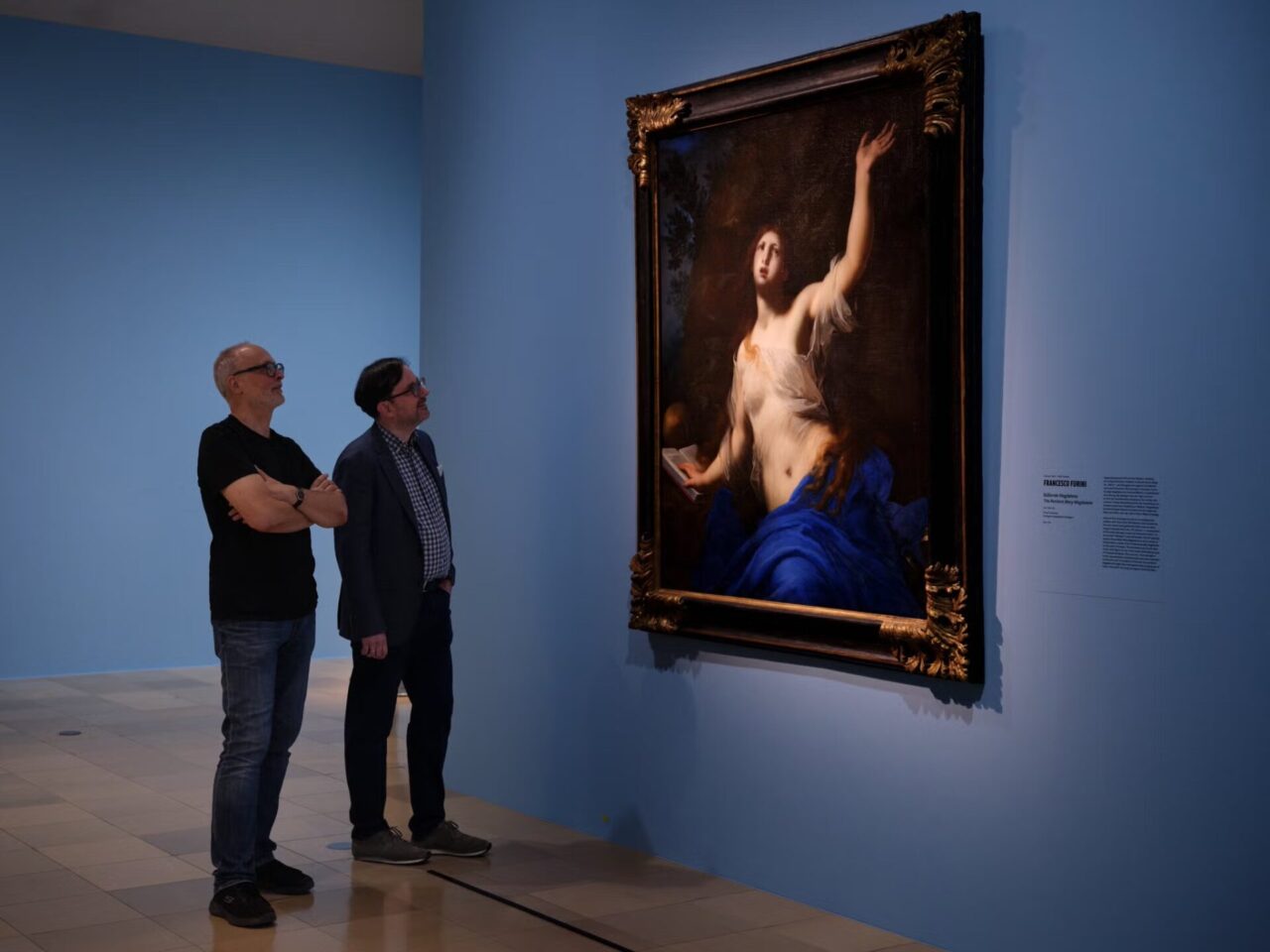
Comprising more than 100 paintings, sculptures and works on paper from around 60 institutions across Europe and North America, with a focus on work by female artists, the show, which runs through Jan. 17, explores how Magdalene’s image has changed over the years — and why.
The exhibition, which occupies more than 10,000 square feet of gallery space over two floors, is organized into 10 thematic sections and runs across the centuries, from the Middle Ages to the present day. It opens with a look at modern perceptions of Mary Magdalene before exploring how depictions of her have reflected changing ideas about women, faith and society over time.
“She’s become this composite figure who’s half biblical, half fictional,” Dr. Eclercy said in a video call in July from Frankfurt, where he is curating the show with Stefan Roller, the head of the medieval department at the Liebieghaus Sculpture Collection.
By the time the Counter-Reformation had taken hold in the late 16th century, Mary Magdalene, who was, according to the Gospels, the first witness to Jesus’ resurrection (either on her own or with other women), had undergone a shift from venerated follower to penitent sinner.
The primary culprit for this change in interpretation was a sermon delivered by Pope Gregory the Great in Rome around A.D. 591, in which he conflated Magdalene with other biblical women, including the unnamed sinful woman who anointed Jesus’ feet in the Gospel of Luke and another woman named Mary, Mary of Bethany, the sister of Martha and Lazarus.
It took about 1,000 years for the change in Magdalene’s image to be reflected in art, Dr. Eclercy said, because the emphasis on the sacrament of penance during the Counter-Reformation, which aimed to reaffirm traditional Catholic teachings, made her a role model for the contrite sinner.
But Pope Gregory, Dr. Eclercy said, was mistaken in his assertion that Magdalene had once lived an immoral life.
“There is no evidence that she was a prostitute,” Dr. Eclercy said.
Regardless, the sermon established canonical precedent from that point forward. (In 1969, the Vatican corrected the misinterpretations around Mary Magdalene in a prayer book, clarifying that Magdalene, Mary of Bethany and the unnamed sinner were three distinct women, and that the New Testament did not describe Magdalene as a prostitute.)
It is difficult to say what Pope Gregory’s motivation may have been in conflating Mary Magdalene with the sinful woman from Luke. His thinking, though, should be seen against the background of a patriarchal society that had difficulties with accepting the biblical assertion that it was a woman who had first seen the risen Christ, Dr. Eclercy said.
“Probably because of that reason, she was assigned another role,” he added.
“But it’s important to realize that this role was not just a bad one,” he continued. “Not just, ‘Oh, she was a prostitute.’ This is one side of the medal. The other side is that, as a penitent sinner, she became this important role model.”
The fallen woman archetype is the depiction most people are now most familiar with, though, thanks to the 1971 rock opera “Jesus Christ Superstar” by Andrew Lloyd Webber and Tim Rice, in which the character of Mary Magdalene sings a yearning ballad called “I Don’t Know How to Love Him.”
The author Dan Brown went a step further in his 2003 best-selling thriller novel “The Da Vinci Code” and contended that Magdalene was Jesus’ wife — and the mother of his child, whom she was purportedly pregnant with at the time of the crucifixion.
(There is no historical evidence to support that claim, Dr. Eclercy said, which stems from a noncanonical Gnostic text, known as the Gospel of Mary, that was likely written in the second century. Most modern scholars agree with his assessment.)
“Nowhere does the Bible say she had romantic feelings for Jesus,” he said. “Somewhere in the apocryphal texts, it says Jesus kissed her on the mouth, but of course, in ancient culture, kissing somebody on the mouth is a very different thing.
“Fragments of text were interpreted in a very modern but sensationalist manner to make them fit into movie stories,” he added.
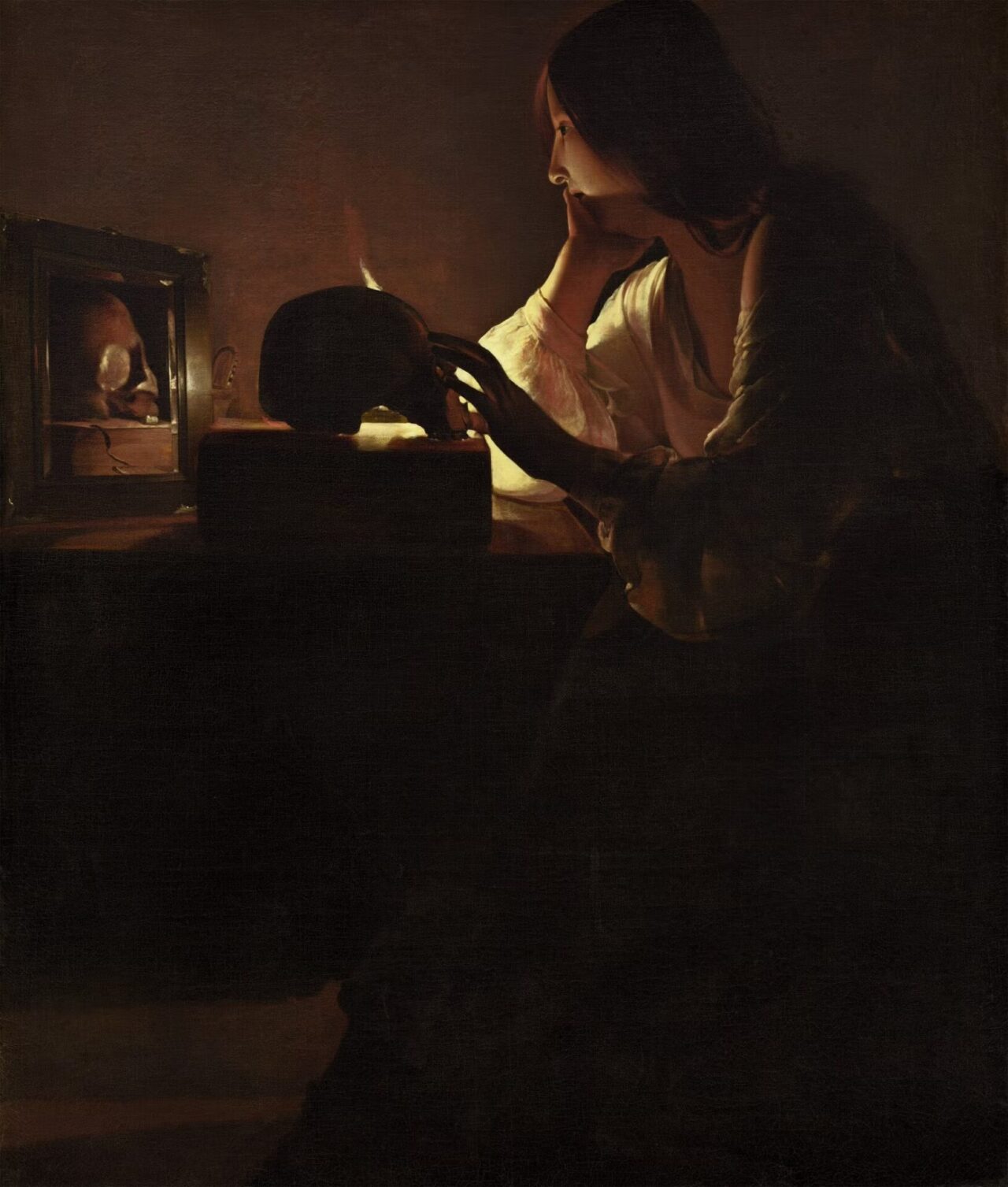
Among the most well-known representations of Magdalene are three that are on view in the show in Frankfurt. In “The Repentant Magdalen” (c. 1635-40), the painter Georges de La Tour shows her with a mirror — a symbol of vanity — and a skull — an emblem of mortality. In the woodcut “The Elevation of Saint Mary Magdalen” (c. 1504-5), the artist Albrecht Dürer depicts her being carried to heaven by angels. Perhaps most dramatically, in “Noli Me Tangere” (c. 1581), the painter Lavinia Fontana depicts the encounter when Mary mistakes the resurrected Christ for a gardener. (The work’s title, translated from the Latin phrase meaning “Do Not Touch Me,” references the words said by the risen Christ in the Gospel of John.)
The La Tour painting, Dr. Eclercy said, melds the sinful and the penitent aspects of Magdalene’s persona into an imagined scene of devotion.
“It’s what I call a synthetic image,” he said. “It’s not going back to a real story, either in the Gospels or the legends. Various lines of tradition are coming together in this painting.”
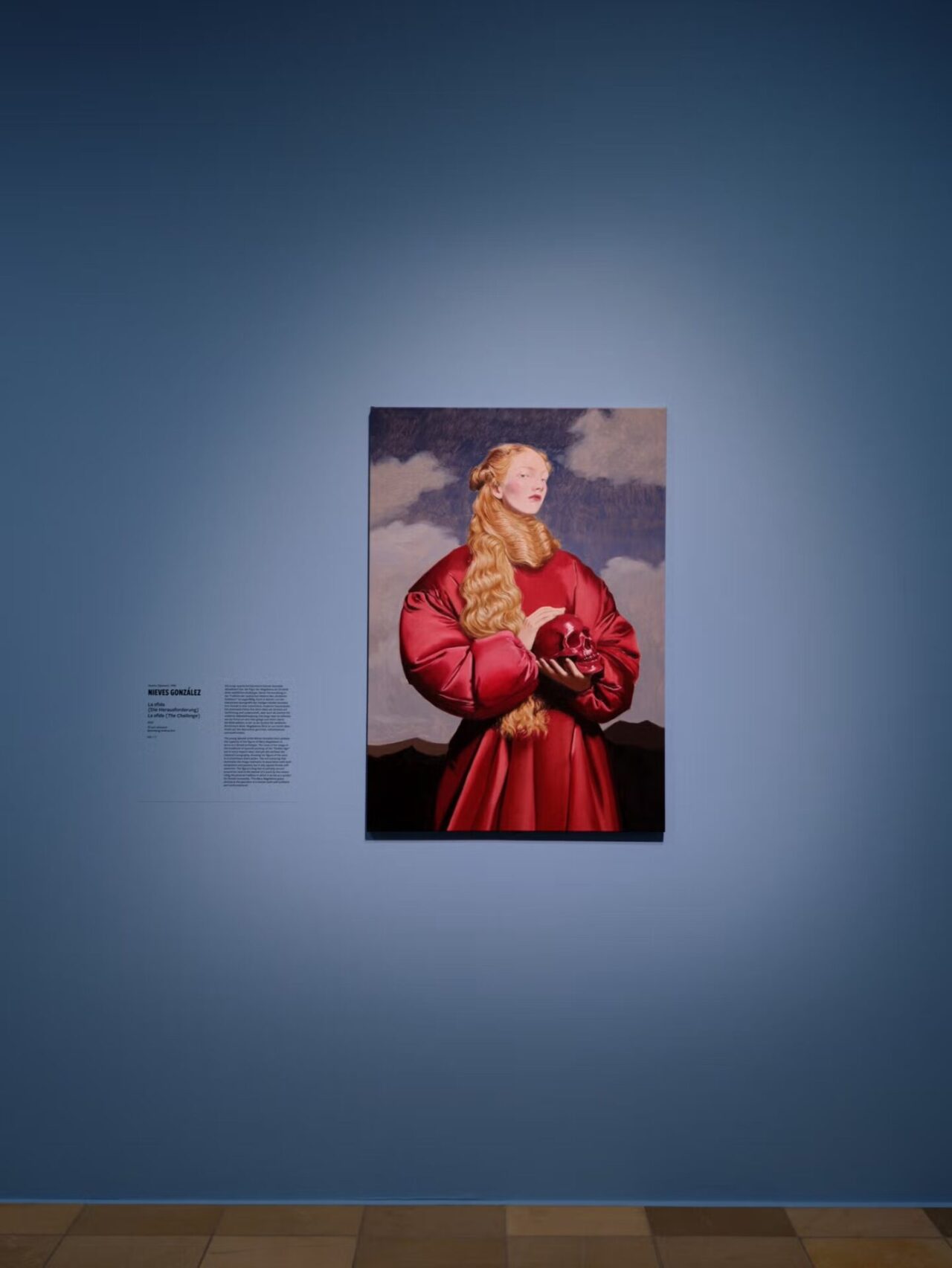
Magdalene is often depicted with standard attributes that help identify her, including a skull — a memento mori, a reminder of the inevitability of death — and a cross, a reference to the fact that she was one of the few followers who remained near the cross during the crucifixion.
Some artists, though, have taken an approach that is more realistic than reverential. This is particularly true of contemporary artists, who are no longer bound by having to work on commission and cater to the desires of the (often traditional) patrons funding their work.
About 90 percent of the work in the contemporary section of the exhibition, made from 1994 to 2025, was created by female artists, Dr. Eclercy said. He noted that these artists — particularly in the last 30 or 40 years — have identified with Magdalene’s strength and self-determination themselves, and have translated that into varied representations of her.
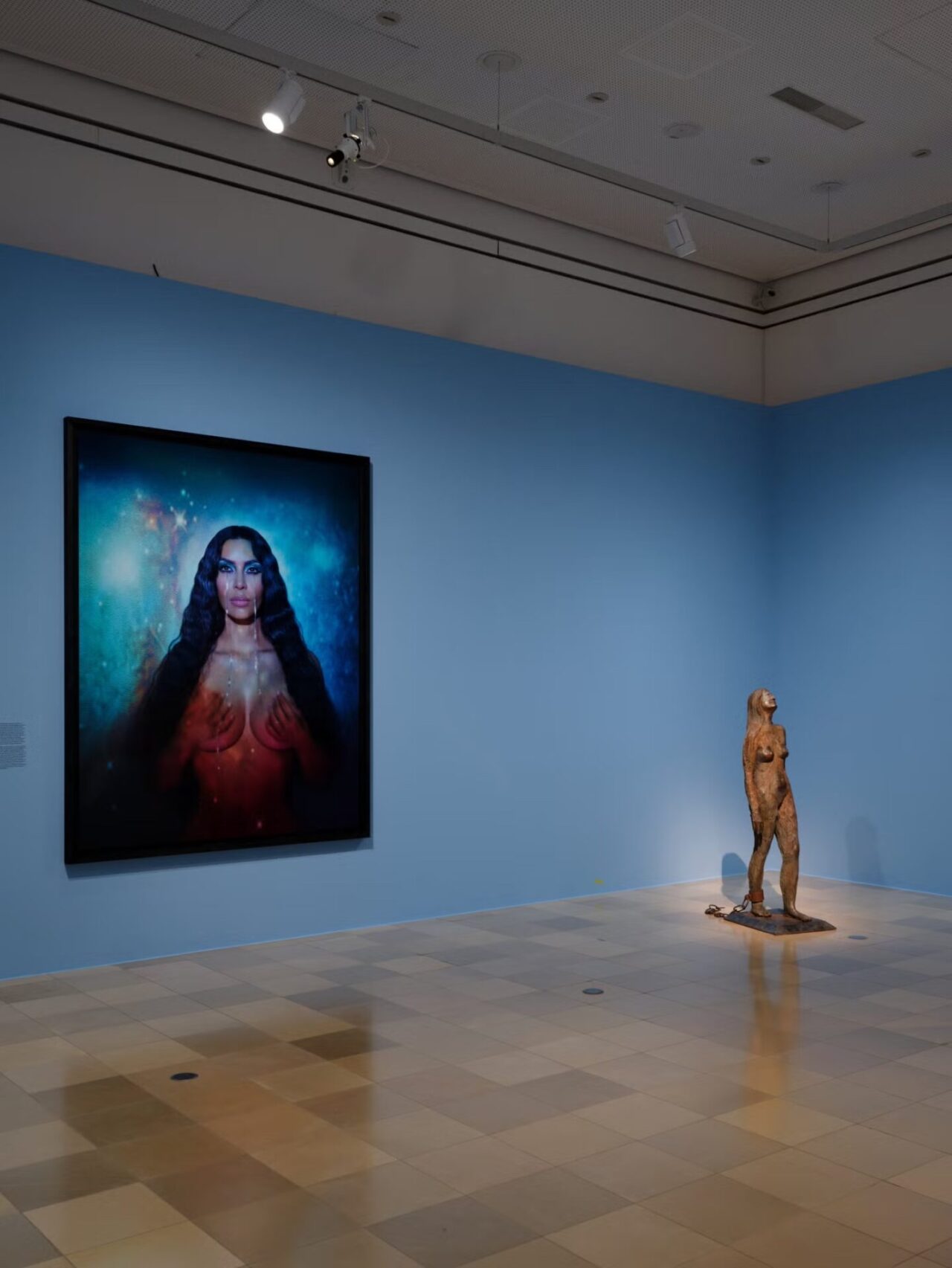
For instance, in the 1995 paintings “Magdalena (Newman’s Zip)” and “Magdalena (Manet’s Queen / Queen of Spades),” the South African painter Marlene Dumas renders Magdalene, on one canvas, as a traditionally coded nude white woman with long, red hair, and then, on the other, as a Black woman with short hair. And in 2018, the American photographer David LaChapelle imagined Kim Kardashian as Magdalene, her hands covering her nipples as she cries glittering streams of tears, in the portrait “Mary Magdalene Abiding Lamentation.”
Through the centuries, Dr. Eclercy said, Magdalene has served as a blank canvas for artists to explore themes of salvation, beauty and grief.
“There’s not one Mary Magdalene in this show, but 10,” he said.
Source: The New York Times